
Blog
The Flashing Chronicles: Most Common Roof Flashings Issues and How to Repair Them
Roof flashings issues account for 90% of roof leaks at homes in Boynton Beach. See the top 10 most common roof flashing issues and how to repair them.
Metal flashings are an unsung hero against water intrusion and damage in roofing. They tirelessly defend your home’s structural integrity. Over 90% of roof leaks occur at the flashings. However, homeowners often overlook them because they are out of sight and out of mind.
Follow along as we explore the top roof flashing issues that cause leaks in Palm Beach County homes. Ensuring your roof flashings remain in optimal condition is essential. Join us as we reveal how to fix and seal these flashings. This helps prevent roof leaks at your home or business.
Top Roof Flashing Issues and How to Fix Them
Roof to Wall Flashing
The roof-to-wall flashing is a frequent location for leaks. It stands guard where the roof and walls converge. If your flashing is damaged or missing, enlist a roofing professional to replace it. They install new, properly fitted flashing.
They also recommend the best materials and methods. This ensures a long-lasting repair.
Skylight Flashing
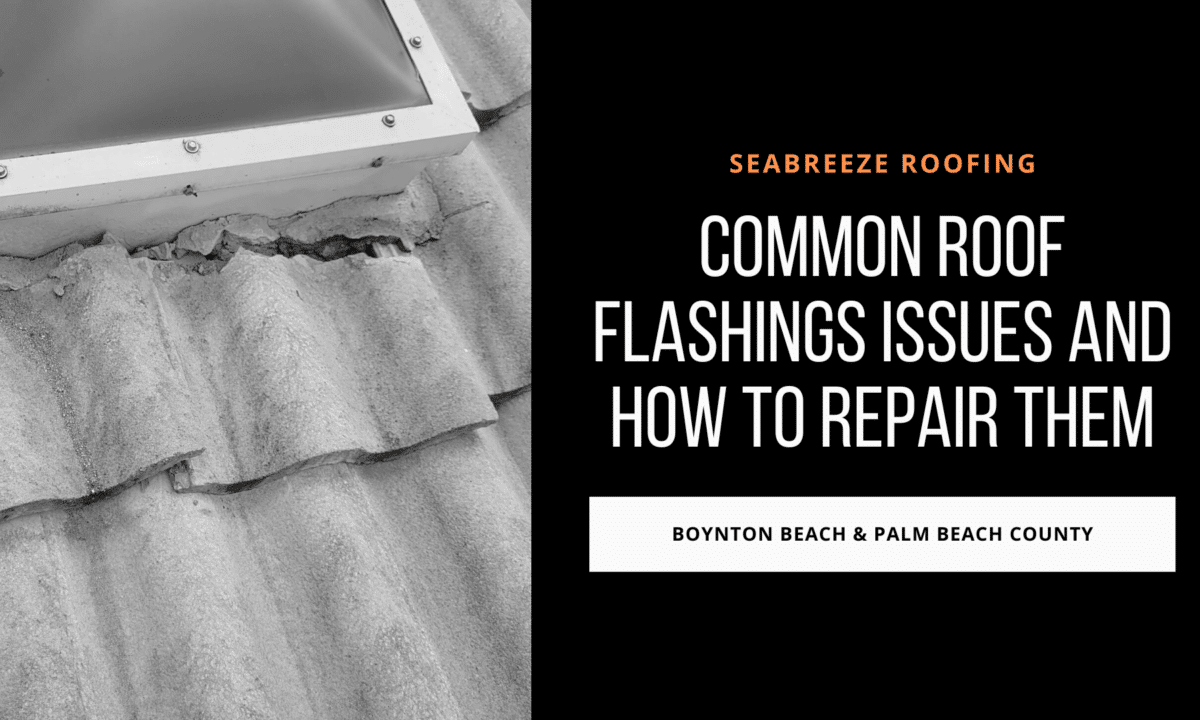
Skylight flashing failure can cause water damage near skylights in Boynton Beach homes. Improper installation or deterioration often causes this problem.
To repair this issue, remove the old flashing. Then install new, properly fitted flashing. Proper installation prevents further water damage.
Chimney Flashing
Chimney flashing protects the area between your chimney and roof. When it fails, leaks can develop quickly.
Call a professional to replace the flashing. They overlap the shingles or roofing material correctly. They also seal the flashing with roofing cement or an appropriate sealant.
Pipe Flashing
Pipe flashing protects areas where pipes penetrate your roof. These areas are vulnerable to water intrusion.
If damaged or leaking, replace the flashing with a new rubber or metal boot. Size and install the boot properly around the pipe. Seal the boot with roofing cement or an appropriate sealant.
This prevents water intrusion.
Step Flashing
Step flashing protects the joint between your roof and a chimney or dormer. This area requires proper sealing.
If flashing is damaged or missing, install new flashing. Place it in a step-like pattern. Seal it with roofing cement or an appropriate sealant.
Valley Flashing
Valley flashing protects the low points of your roof. These areas collect and direct water.
If compromised, replace the flashing. Install new flashing along the valley. Seal it with roofing cement or an appropriate sealant.
This prevents water intrusion.
Drip Edge Flashing
Drip edge flashing protects the edges of your roof. It directs water away from the fascia and into the gutters.
If damaged or missing, install new flashing. Place it along the roof’s edge. Seal it with roofing cement or an appropriate sealant.
Soffit Flashing
Soffit flashing protects the area between your roof and soffit. This area helps prevent water intrusion.
If flashing is damaged or missing, install new flashing. Place it between the roof and soffit. Seal it with roofing cement or an appropriate sealant.
This prevents water intrusion.
Protect Your Home by Maintaining Roof Flashings
Roof flashings protect your Boynton Beach home from water intrusion and damage. They all share the same goal of protecting your roof and structure.
Ensuring flashings remain in optimal condition is essential. If you’re uncomfortable repairing or replacing flashings, hire a professional roofing contractor.
Trust Seabreeze Roofing to ensure the job is done correctly.